
Two questions worth asking in the age of AI
(because I think we are asking the wrong questions)

Have you ever flipped through a magazine and then found yourself trying to enlarge a photo with your fingers like you would on your phone?
A similar experience happened to me recently.
After I spent hours learning AI, I got a burst of energy to bake. I wanted to make Greek pie and roasted carrots and blueberry muffins and essentially use up all the fresh food in my refrigerator, stock the freezer with meals, and bring some prepped food back to Maryland. It’s a cycle I go through in some fashion every time I’m transitioning from Pittsburgh to Maryland: use up the food, make sure I have something to eat when I return.
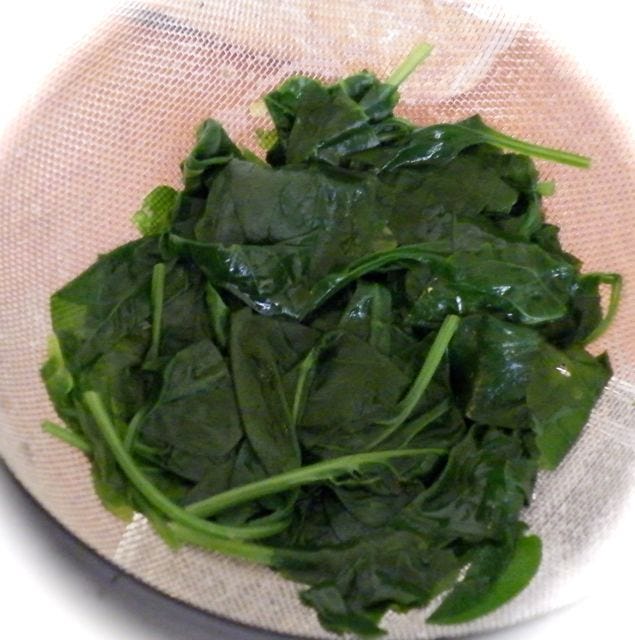
Because I had been so steeped in AI—realizing I could create systems for some of the menial, repetitive tasks I do each week and then building those systems—I found myself wondering as I cooked, “is there a shortcut for removing all these stems from the spinach?” and “what could I delegate to AI?” and things of that nature. It was bizarre. In a matter of a day, it was like my brain had been rewired to think about efficiency and processes for everything I do.
As I continued measuring ingredients and slicing carrots, I found myself wondering what I WOULD want to continue to do, if / when we got to the point where AI and household bots could do nearly everything, even yard work.
I realized I enjoy de-stemming spinach.
I enjoy washing dishes by hand. (In all the places I’ve lived with dishwashers, I’ve never used one.)
Folding laundry? Debatable.
I love writing, I love editing, I even like reading and responding to emails. I get lost for hours in Canva and Final Cut … or being out in the world shooting photos and videos to share later. Those are things I would never want to hand off to AI because they are a deep source of who I am. They are the things that make me grateful to be here. Yeh, vegetable prep too.
I will be transparent here and tell you I’ve tried—more so out of curiosity—to use AI to generate an essay, and I’ve refined the prompt and guidelines over and over again, and the output has remained, at its core, an essay generated by a machine (I’m sure a lot of you have seen the ”who’s a better writer” quiz on NYT by now). AI is brilliant at organizing my thoughts when I am scattered, summarizing essays I’ve already written, even rephrasing something or helping with structure or lists based on my source material. But writing an essay from scratch? It doesn’t pass muster with me.
Maybe it’s only a matter of time before it does, but I keep coming back to the same question: if writing is your art—not used tangentially to your work—do you want to hand it over to a machine? Creation is what connects me to myself and to God. I have no desire to hand that over to AI.
Maybe people thought the same thing during the Industrial Revolution. I’m sure there were people who found meaning and purpose in a day’s work, working with their hands, crafting something, creating, bringing something into material existence—and didn’t want to give that away. A machine might be more efficient, but at what cost? When does the loss outweigh the gain?
So ultimately, if AI could generate a piece of writing—or a song or a painting—that was just as good or better than your own, would you want it to, in place of you creating it yourself?
Manually formatting calendar listings, figuring out Squarespace to make a functional website, constantly revising the website … these are things I would gladly hand off to AI, if given the choice. Even finding publishing companies that had open submissions AND were accepting simultaneous submissions AND were open to my book genre specifically—that was a real headache that took me weeks, and a quick question to AI might’ve given me better results in a matter of seconds.
(On an environmental note: if you added up all the energy usage it took me to go through that process over a span of about two months, would it essentially be about the same amount of energy it would take AI to respond in less than a minute?)
I’m still doing all of these things manually, but it would make sense to get some AI assistance. These preferences are just that—preferences, and different for everyone.
But because AI is growing at rapid speed—new models released every week—I think this is a question worth asking now: What would you want to continue to do in the age of AI? How would you want to fill your days? What work is fulfilling, and what work feels like it’s stealing your time?
Everyone’s arguing about jobs and copyright and whether AI is conscious, but I think we are asking the wrong questions. I’m wondering what do you actually want your days to feel like? What will you choose to keep doing, even when you don’t have to?
The other question I’ve been mulling over: What can AI not replace, and what should we not LET it replace?
In the midst of thinking about this—AI and artists / writers specifically—I heard about Mia Ballard.
Mia Ballard self-published her horror novel “Shy Girl” in 2025, and it was later picked up by a major publisher. The US edition was just about to be released when the publisher canceled the book after growing skepticism that it was written by AI. Apparently an AI detection tool flagged ~78% of the book as AI-generated. Mia Ballard herself has explicitly denied using AI to write it.
There’s a YouTube video—nearly three hours long—about it, titled “i’m pretty sure this book is ai slop” (sitting at 1.4 million views).
I know as a writer I sit on the atypical side of the argument, but: 1) is it “AI slop” if you can’t even tell whether it was generated by AI or a human? And 2) a couple months ago, I put my writing (from these Substack posts) into three of those AI detectors, and every one of them said my posts were in the 80-95% range of being AI-generated. I didn’t know how to feel about that—like, either my writing is generic or it’s perfect? Is the “AI-generated” style really just a certain kind of clean, coherent prose that we’ve now trained ourselves to be suspicious of?
This boils down to the question of what makes us human.
What does make us human? What aspect—or aspects—of our humanity do we hold onto very intentionally as AI floods every corner of our lives? How do we not lose our humanity?
For me, being human means I am creating, expressing myself. I see those experiences as being uniquely human—and I could be wrong, but that is how I feel. Those are the things I want to hone in on now and grow, so that they become so strong, nothing can disrupt or dissolve them.


★ What can AI not replace?
★ What should we not let AI replace?
★ What would you want to continue to do in the age of AI? How would you want to fill your days?
★ What work is fulfilling, and what work feels like it’s stealing your time?


I am gearing up for a trip to the Laurel Highlands this week for another travel story for Daytripper magazine. Fingers crossed the weather will be nice. Next week, I’ll head back to Pittsburgh and from there, westward to the desert!


Hey Lauren, I've been asking these questions too, and feeling really grateful that my work is with plants and my hands. I'm aware that AI can provide perfume formulas, but I've noticed that their not very good, and I don't think it will be able to grow plants, distill essential oils and make perfume that contain the same vitality as me. In the 90's when I got into aromatherapy, one of my teachers did an experiment with testing lavender essential oil that before distilling had been gathered by hand with a traditional scythe, versus a machine. Same field, same distillation method, yet the one that had been gathered by hand with a scythe contained more "healing" molecules.