
Winter Reading List
Books that are perfect for long, dark nights

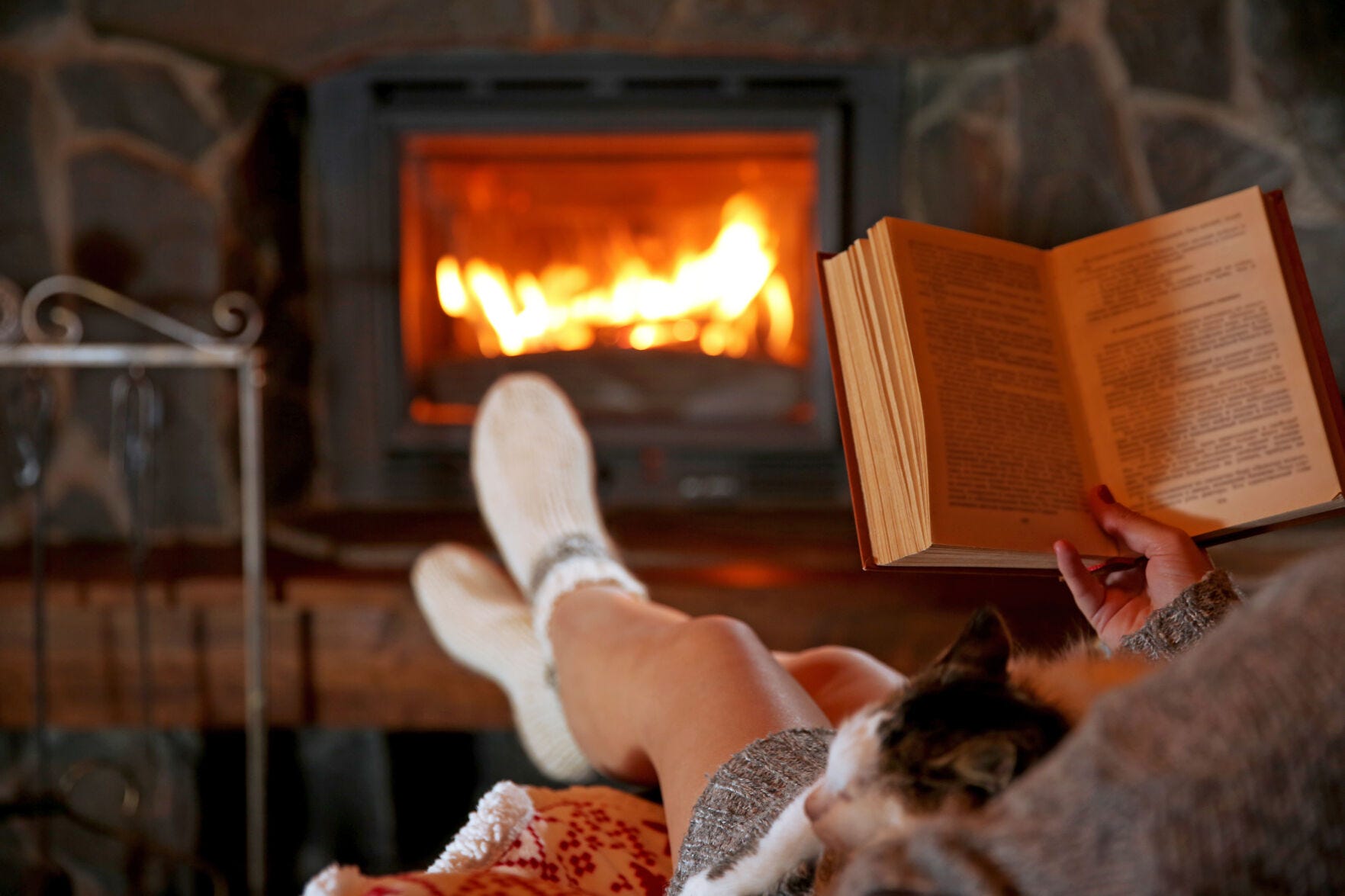
Last winter, when I found myself in that cold, dark place that comes after the spell of the holidays but before spring reveals itself, I began reading Tolstoy.
I found it comforting to send my mind to a snowy 19th-century Russia, complete with ice skating and fur coats and family arriving by train. I sunk easily into their slow mornings of drinking coffee while reading the newspaper and their after-dinner cigars. I was reading “Anna Karenina,” and its icy exterior was warming my heart.
It got me thinking about its antithesis: summer book-list drops comprised of beach reads and romantic fantasies and otherwise fast-moving novels that can be read start to finish in one lazy afternoon.
But what happens when it’s a different everyday reality we want to escape or embrace? What about the gray days of January or the “wintry mix” afternoons, when you want to check out, take a personal day, and tuck yourself under blankets with a cup of hot tea?
What should you reach for when you are face to face with SAD or having another existential crisis and don’t want to get out of bed? What book will you pull from the shelf when it’s March but still bitter cold and dreary?
I would like to suggest a few titles. Themes of death, depression and snowy, icy locales (most often Russia) continually resurface.
FICTION
“Anna Karenina” by Leo Tolstoy
The famous line “All happy families are alike; each unhappy family is unhappy in its own way” is the first sentence of this novel and certainly sets the tone. As mentioned earlier, read it for its atmosphere, themes and setting — heavy snow, sleigh rides, and intimate indoor scenes resonate perfectly with the season.
“The Brothers Karamazov” by Fyodor Dostoevsky
Russia (again), plus murder and religion make this a perfect read for long, dark nights. This sprawling philosophical novel traces three brothers — sensualist Dmitri, intellectual Ivan and spiritual Alyosha — as they grapple with their father’s murder and the weightier questions of faith, free will and moral responsibility. Dostoevsky examines whether meaning can exist without God, whether love can redeem suffering, and how each soul must reconcile the divine and demonic within itself.
“One Day in the Life of Ivan Denisovich” by Alexander Solzhenitsyn
Solzhenitsyn distills the entire Gulag experience into a single winter day in the life of prisoner Ivan Denisovich Shukhov, revealing how survival itself becomes an art of small dignities and negotiations. Mundane details — securing extra bread, hiding a blade, finding warmth — carry profound weight. They show how resilient the human spirit is.
“Doctor Zhivago” by Boris Pasternak
I read this in college, then watched the movie, and still think of it every winter — because it is just so wintry (Russian writers are really are the kings of winter reading.)
“The Winter of our Discontent” by John Steinbeck
This feels like a fitting winter read for the state our country is in, as it follows a once-wealthy man who has been reduced to a grocery store clerk. He confronts the moral decay beneath America’s material prosperity, while wrestling with temptation, corruption and the erosion of values. The book asks: Can integrity survive in a culture that worships material success?
“The Hours” by Michael Cunningham
Three women across different decades—Virginia Woolf writing “Mrs. Dalloway,” a 1940s housewife reading it and a modern editor living it — move through parallel stories, through the hours of their lives. Or watch the (terrific) 2002 movie starring Nicole Kidman, Meryl Streep and Julianne Moore
“Steppenwolf” by Hermann Hesse
As Walt Whitman put it, “We contain multitudes,” and Hesse’s book examines that idea so thoroughly, ultimately asking if we can accept the multiplicity within us. I found this book, read with an open mind, to work on many levels.
“The Road” by Cormac McCarthy
Think post-apocalyptic, father and son, and the fight to survive … albeit in a dystopian reality that includes cannibalism. McCarthy asks whether love and goodness retain meaning when civilization has collapsed. What matters when the world has seemingly ended? This, too, was adapted into a film (2009), like several others on this list.
“The Stranger” by Albert Camus
“The Stranger” has stuck with me for decades, as it held such a disquieting power over me (and I suspect many other readers). Meursault is so emotionally detached as to be almost the antithesis of a protagonist, and yet, through this character, I believe Camus is asking: Why must we all perform? Why the need to be an alternate, “superior” version of ourselves? Why is our merit, character, integrity, etc. generally measured by how well we conform, fit in, and pass these silent tests of societal norms?
“Orlando: A Biography” by Virginia Woolf
This list would be incomplete without the sharp, stream-of-consciousness prose of Virginia Woolf. In this novel, she follows aristocratic Orlando across four centuries and a miraculous sex change, from Elizabethan England to the 20th century. The book was written as a love letter to Vita Sackville-West, Woolf’s lover and close friend.
“Frankenstein” by Mary Shelley
Modern popular culture would have us affiliate the Frankenstein character with Halloween, but Mary Shelley’s novel feels eternally winter, with its dark, cold atmosphere and themes of isolation, emotional coldness and death, which are mirrored by its icy, Arctic settings and Gothic gloom.
NONFICTION / MEMOIR
“Autobiography of Malcolm X”
Malcolm Little’s transformation from street hustler to Malcolm X to El-Hajj Malik El-Shabazz unfolds as a powerful testament to radical reinvention. Follow along on his fascinating journey from the margins of American society through the Nation of Islam and finally toward a more inclusive human rights vision, with a throughline of courage and an endless quest for growth.
“What I Talk About When I Talk About Running” by Haruki Murakami
A meditation on the parallel disciplines of long-distance running and writing novels — in both, there is the necessity of solitude, endurance and the accumulation of small daily efforts. His reflections become a quiet philosophy of creative life and might serve as a quiet motivation to use these long, winter days to carve away at some of your own goals.
“The Snow Leopard” by Peter Matthiessen
The author is on a journey — a long, arduous journey with another man, through the snowy Himalayas to study blue sheep, with the hopes of finding a snow leopard. But truly, the journey is not about blue sheep at all — or snow leopards. In a word, the journey is about spiritual transformation. The treacherous trek becomes a meditation on impermanence, Zen practice and the realization that what we seek may matter less than the seeking itself, that presence in each difficult step contains its own illumination.
Essays by James Baldwin
Any essay or collection of essays will do, as his recurring themes of oppression, violence and rage show up on the page, though strewn with love, morality and a lyricism that makes his work best read aloud. You’ll also be learning more American history every time you dip into one of his books, particularly the Black experience.
“My Struggle” by Karl Ove Knausgård
Six volumes, titled “My Struggle,” autobiographical and by a Norwegian writer — you can see why this has a very obvious place on the list. Through impeccable details when recalling his past, he ultimately reveals the profound strangeness of simply being alive.
POETRY
“The Great Fires” by Jack Gilbert
The beauty in Gilbert’s poetry is the small glimpses of sheer joy found amid loss, loneliness and the passage of time. He is also not a showy poet but a poet of the people, I’d like to say — one you will likely resonate with. Like Knausgård, he instills in his work a gratitude for being alive, regardless of the rollercoaster this is.
“Kyrie: Poems” by Ellen Bryant Voigt
Written in response to the 1918 influenza pandemic, Voigt’s chapbook of linked sonnets explore individual grief, community devastation and the inadequacy of language to contain catastrophic loss. Though written well before the COVID-19 pandemic, the emotions imbued in the experiences feel eerily similar to our modern equivalent.
“Japanese Death Poems”
As the title implies, this book is a compilation of short poems, often haikus, written mostly by Zen monks just before they died. These brief verses distill a lifetime of wisdom into concise and final images, as if given as one last offering to the world.
Honorable mentions: Sylvia Plath (anything), “Zen Mind, Beginner’s Mind” by Shunryu Suzuki, and anything by Sartre or Nietzsche.
This story was originally published in 72 Hours.
•••
Recent reads by other writers to check out, courtesy of my day job:
Docudrama ‘Boomtown’ explores how arts and inclusion shaped downtown Frederick’s revival
‘It happened here’: Frederick’s underground music scene of the ‘80s


I drove today, and it was a little dicey. I am still up in Pittsburgh, and if the snow keeps up, I don’t know when I’ll make it back to Maryland … stay cozy, friends!


Light reading! 😜
Japanese Death Poems ! Love this list ... I need to revisit The Stranger as well.